




Ebrington — From Barracks to Public Square
Transport expert and civil engineer Karen McShane explores how Derry’s historic Ebrington Barracks has evolved from a military stronghold into one of Northern Ireland’s most vibrant public spaces.
Between the Foyle Bridge and Craigavon Bridge, on an elevated piece of ground, sits the site of the former Ebrington Barracks. Its military significance long predates the barracks themselves — this strategic position overlooking the River Foyle was used during the Siege of Derry in 1689, part of the Williamite Wars.
In 1841, the modern Ebrington Barracks were constructed as a British military base, designed in the shape of a star fort to reflect the defensive principles of the time. A postcard shows the site’s elevation from the city side in 1919, with the railway line clearly visible along the quayside.
During the Second World War, Ebrington functioned as a naval base and refuelling and repair centre for warships operating in the North Atlantic. By 1945, the facilities helped oversee the surrender of German U-boats near Lisahally at the end of the European war.
Its military role continued through the decades. During the Troubles, Ebrington became the main British Army base in Derry, hosting the 8th Infantry Brigade and supporting security operations throughout the city and northwest. It was occasionally targeted by dissident groups, including bombings and attempts to breach its perimeter in the early 2000s.
As security conditions improved after the 1998 Good Friday Agreement, the drawdown of troops and closure of sites like Ebrington became key milestones in the peace process. The barracks officially closed in 2003 and were handed over to civilian authorities. Over the last decade, I have had the opportunity to work on several of these former military sites.
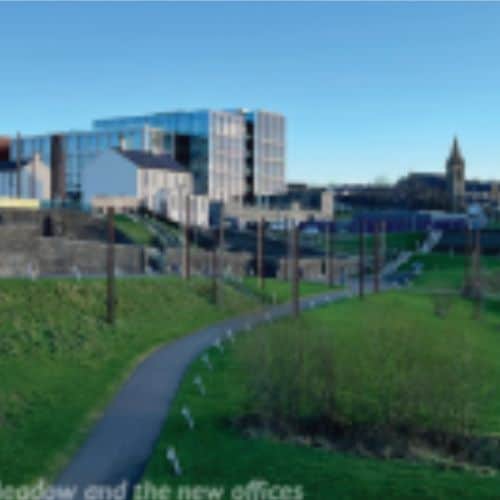
Since its closure, Ebrington has undergone a remarkable transformation. The regeneration of the area was accelerated by the opening of the Peace Bridge in 2011, which linked the site directly to the city centre and symbolically opened it to the public. The former parade ground is now Ebrington Square, a large civic plaza used for events, concerts, festivals and markets. What was once a closed military space has become an inclusive, welcoming heart of the city, home to public art such as the Peace Pledge Tree and Mute Meadow installations.
By 2025, many of the historic barrack buildings had been creatively repurposed. The opening of the Ebrington Hotel & Spa transformed former military quarters into a luxury leisure venue. The site is now home to restaurants, cafés and craft brewery spaces, raising the profile of the riverside quarter.
New offices and innovation hubs such as The AMP have brought business and economic activity back to the area while preserving its architectural heritage.
Work is also underway on the construction of the DNA Hub (Derry North Atlantic), which will feature immersive galleries exploring Derry’s maritime and social history, including its wartime roles. This project forms a central part of the city’s ongoing cultural revitalisation. Recent planning approvals have expanded the mixed-use development further, adding residential, commercial and creative industry buildings to continue the evolution from military footprint to vibrant urban quarter.
I have had the honour of reviewing several of the transport proposals, including traffic management and accessibility improvements, and it has been inspiring to see this transformation firsthand. Ebrington has shifted from being a symbol of power and division to a landmark of peace, culture and community, a place where people now gather to celebrate life in the city.
Ebrington’s story mirrors that of Derry itself, from strategic military stronghold, through global conflict and local unrest, to peace and regeneration. Once a closed and fortified site, it has been deliberately reimagined as an open, shared public space. This successful blend of preservation, design and community use marks one of the city’s finest examples of adaptive reuse.
It stands today as a real credit to everyone involved in its evolution, a space where history and modern life coexist in harmony.