
A New Era for Heart Health in Northern Ireland
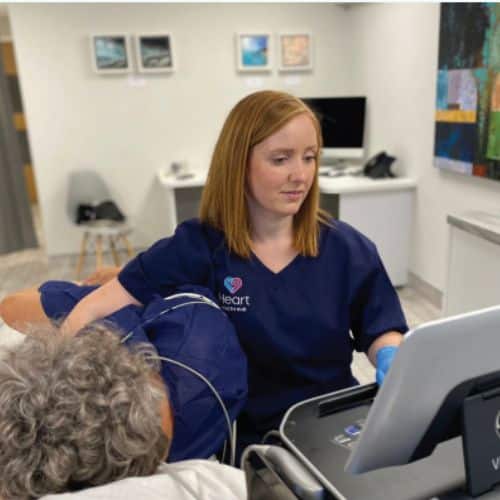
Clinical Scientist Charlotte Currie, founder of Heart Health Hub at Culloden Estate & Spa, explains how advanced screening and early detection are transforming cardiac care in Northern Ireland.
A Career Dedicated to Understanding the Heart
Can you tell us a little about who you are and what first drew you into the world of cardiology?
I’m a Clinical Scientist specialising in cardiology, and I’ve dedicated my career to understanding how the heart works – and more importantly, how to detect when something isn’t quite right.
What first drew me into cardiology was how incredibly powerful early detection can be. The heart is such a vital organ, yet so many people don’t realise there may be an issue until symptoms become serious and things quickly start to go wrong.
During my training, I saw first-hand how identifying a condition early could completely change someone’s future – preventing heart attacks, heart failure, strokes or long-term damage. That ability to genuinely alter someone’s life trajectory is what inspired me to specialise in this field.
Importantly, heart conditions don’t only affect older adults. Some cardiac issues can be present from a young age, often without obvious symptoms. That’s why I’m such a strong advocate for accessible screening from the teenage years onwards – for both males and females over 14.
Early reassurance can provide peace of mind, and early detection can be lifesaving, especially in very active individuals.
Cardiology is also constantly evolving, with new technologies and research improving how we diagnose and manage heart disease.
I’ve always loved the balance of science, technology and patient care. It’s incredibly rewarding work.
My career in cardiology started by volunteering on the local cardiology ward, moving into cardiac rehabilitation, then on to cardiac investigations, where I have been ever since.
What a Clinical Scientist in Cardiology Does
What does a clinical scientist in cardiology actually do? It’s a question I’m asked all the time.
As a Clinical Scientist in cardiology, I’m trained to perform and interpret highly specialised diagnostic heart tests. This includes echocardiograms (ultrasound scans of the heart), heart rhythm monitoring and interpretation, and in-depth blood pressure analysis.
We work very closely with cardiologists and other healthcare professionals to help diagnose heart disease through screening, monitor existing conditions and guide treatment decisions.
In many cases, we’re the ones identifying subtle abnormalities that might not yet be causing symptoms.
Screening is a particularly important part of what we do.
Many heart conditions, especially inherited or structural conditions, can be silent in young people. Offering self-referral screening for individuals aged 14 and over, both male and female, allows families to be proactive rather than waiting for symptoms to appear.
It removes barriers and gives people control over their own health journey.
A big part of the role is precision – understanding the science behind the numbers and images, but also recognising that every scan represents a real person sitting in front of you. It’s both technical and deeply human.
The Journey to Becoming Northern Ireland’s Only Clinical Scientist in Cardiology
You’re Northern Ireland’s only clinical scientist in cardiology – what has that journey been like professionally?
It’s been both challenging and incredibly rewarding.
Training to this level requires three years of postgraduate education, plus clinical practice and national accreditation. Being the only person in Northern Ireland in this specific role has meant I’ve had to be resilient and driven – there isn’t always someone locally who has walked the same path.
At the same time, it’s been a privilege.
It has allowed me to help shape standards of care, bring specialised expertise to patients here, and advocate for greater awareness around heart health, particularly around early and self-initiated screening.
Professionally, it’s pushed me to continuously develop, collaborate across disciplines and stay at the forefront of cardiac science.
Why Heart Health Hub Was Created
Why did you decide to launch Heart Health Hub?
I launched Heart Health Hub because I saw a gap and an absolute need.
So many people want reassurance about their heart health, especially women, but they don’t necessarily meet NHS referral criteria or they feel their concerns aren’t being fully explored.
Often, people only get investigated once symptoms are advanced, which is often too late.
I also recognised a need for accessible screening for teenagers and young adults. Parents are increasingly aware of cardiac risk in sport and family history of heart disease, yet pathways for reassurance can be limited.
Offering self-referral screening for over 14-year-olds gives families an opportunity to check, understand and act early if needed.
Heart Health Hub was created to make high-quality, evidence-based heart screening more accessible. My goal was to give people the opportunity to be proactive rather than reactive.
Early detection can quite literally save lives, and I wanted to create a service that empowers people with clarity and understanding about their own heart health.
Starting this process has allowed me to collaborate with like-minded medical professionals whose hands are often tied in traditional NHS care.
Changing Access to Heart Screening
How does Heart Health Hub aim to change the way people access heart screening and early detection?
We focus on accessibility, education and prevention.
At Heart Health Hub, we offer comprehensive cardiac assessments in a calm, supportive environment – without long waiting times or the need for a GP referral.
Individuals aged 14 and over can self-refer, which removes one of the biggest barriers to early assessment.
But it’s not just about running tests.
It’s about explaining what those results mean, discussing risk factors and giving practical guidance on next steps alongside my medical colleagues.
Women in particular can experience different heart disease symptoms compared to men, and they are often under-recognised. By raising awareness and providing tailored screening across all age groups, we aim to close that gap.
The earlier we identify risk, the more we can do about it.
The Message for Readers
What do you hope readers will take away from your column, and why is heart health something we should all be thinking about more proactively?
I hope readers take away confidence, clarity and the understanding that there are options out there.
Heart disease is still one of the leading causes of death worldwide, yet it’s often perceived as a “male problem”. Many women are juggling careers, families and responsibilities, often putting their own health at the bottom of the list.
At the same time, we should also be thinking about the next generation – teaching our teenagers that heart health awareness starts young.
I want my column to break down complex clinical information into something approachable and empowering.
Small lifestyle changes, understanding your numbers like blood pressure and cholesterol, recognising symptoms, knowing your family history, and understanding that screening is available from age 14 onwards – these can make an enormous difference.
Most importantly, I want women to feel that prioritising their heart health isn’t selfish, it’s essential. When we look after our own health, we’re better able to care for everyone else around us.
Prevention isn’t about fear. It’s about knowledge, confidence and taking control of your future – at every age.
For further information or to book an appointment, please visit:
www.hearthealthhub.co.uk
Heart Health Hub
Bangor | Dundonald | Holywood
Tel: 028 9042 2500
Email: info@hearthealthhub.org
Website: www.hearthealthhub.co.uk