





John Laverty Optometrists
Seeing Below the Surface
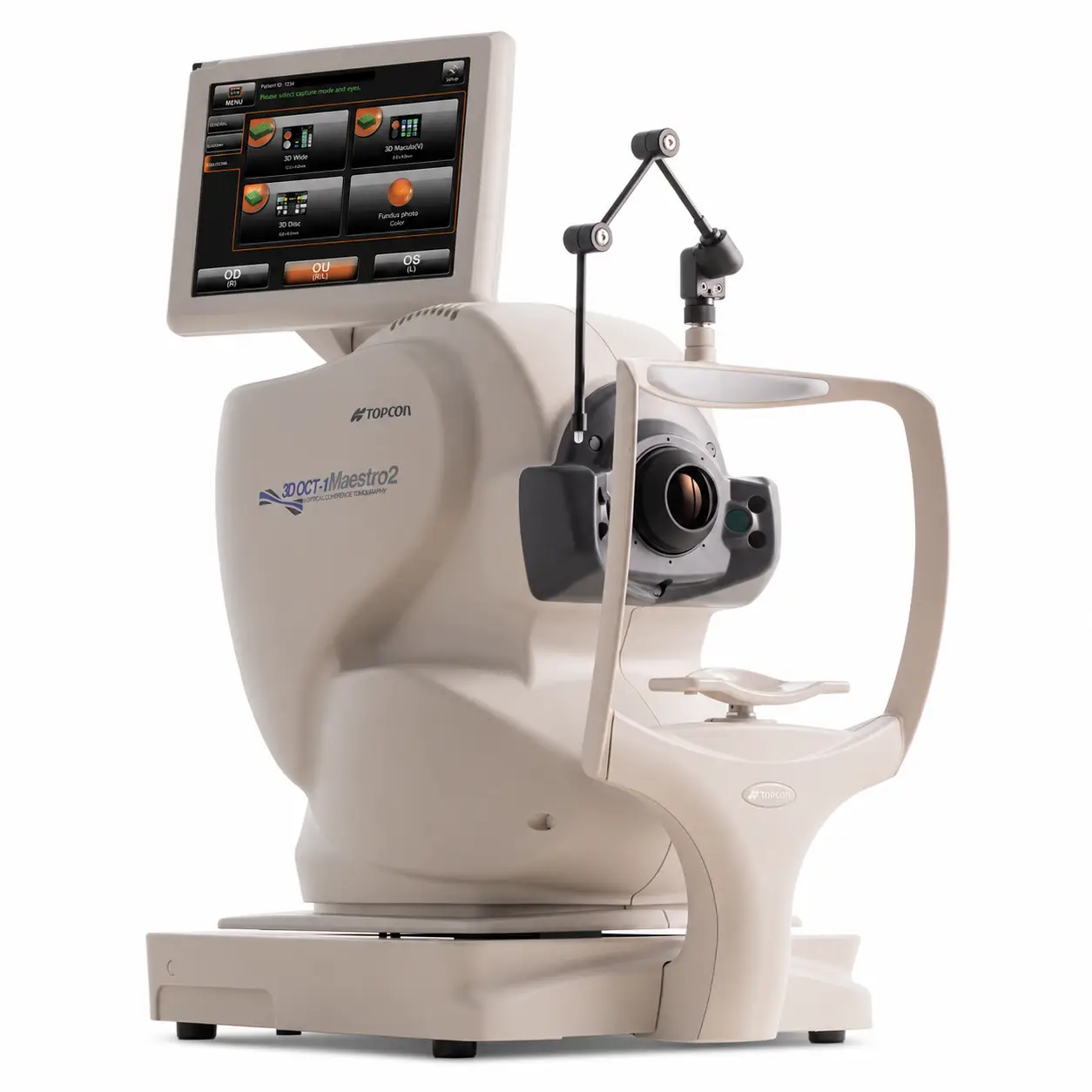
Local Women columnist Brian McKeown discusses the benefits of the latest OCT Retinal Digital Scanner, now available in all three John Laverty Optometrists practices, as Garvagh joins Ballymoney and Coleraine in offering this advanced eye health technology.
What is an OCT?
Optical Coherence Tomography is an advanced eye scan which uses light to look beneath the surface of the eye and reveal layers we cannot see with traditional equipment. It creates a detailed image of the back of the eye, helping your optometrist spot possible early signs of eye disease, often before you notice any changes in your vision.
We’re proud to now offer OCT technology in all three John Laverty Optometrists practices, with Garvagh recently joining Ballymoney and Coleraine in providing this enhanced level of care. A picture of the eye is presented as well as a cross-sectional view.
What can it do?
An OCT can literally help to save sight. It helps us every day to make more informed decisions about the effective management of our patients.
Using the scans, your optometrist can explain what we are seeing, highlight anything that needs monitored and give you a clearer picture of your eye health. It is quick, painless and can be completed in just a few minutes.
What conditions can be detected?
I often explain to people that the eyes are the only place in the body where we can look in, see the blood vessels and get a glimpse of what may be happening inside the body.
Age-Related Macular Degeneration
Age-related macular degeneration (AMD) is the leading cause of blindness in the UK. It causes gradual deterioration of the macula, the central portion of your retina which enables detailed vision. There are two types of AMD: dry and wet.
Wet AMD causes rapid reduction in vision and must be treated in hospital very quickly. OCT can help identify the earliest signs of AMD, determine whether it is the dry or wet form, and help monitor its progress over time.
Diabetes
Over 4 million people are now diagnosed with diabetes in the UK, with experts claiming that over half a million people may currently be living with undiagnosed type 2 diabetes.
Diabetic retinopathy is one of the leading causes of blindness in people of working age in the UK. OCT examination can help enable early detection of diabetic retinopathy, allowing early referral and management, which can greatly improve the success of treatment.
Glaucoma
Glaucoma is a condition which causes damage to the optic nerve, the part of the eye which connects to the brain, and can lead to gradual loss of peripheral vision.
Recent statistics suggest that some form of glaucoma affects around two in every 100 people over the age of 40, rising to almost one in 10 in people over 75 years.
Because the early stages of chronic glaucoma do not cause symptoms, regular eye examinations are essential to detect it as early as possible so that ongoing damage can be prevented.
OCT examination can measure numerous features at the back of the eye and support early diagnosis of glaucoma. It can also help monitor your eye health year after year, allowing subtle changes to be identified over time.
Vitreous Detachments
Vitreomacular traction can be diagnosed through OCT, providing valuable information about the relationship between the vitreous and the retinal surface of the eye.
As we get older, the vitreous jelly that fills the eyeball can change. It becomes less firm and can move away from the back of the eye towards the centre. In some cases, parts do not detach fully and this can cause pulling on the retinal surface.
The danger with a vitreous detachment is that there is often no pain and your eyesight may seem unchanged, while the back of your eye may still be under strain.
Macular Holes
A macular hole is a small hole in the macula, the part of the retina responsible for sharp, detailed central vision. This is the vision we use when looking directly at things, reading, sewing or using a computer.
Macular holes usually form during a complicated vitreous detachment, when the vitreous pulls away from the back of the eye and causes a hole to form. Management of this condition needs to be carried out by an ophthalmologist in hospital.
How can I get an OCT scan?
When you call us to book your next sight test, simply ask about our enhanced sight test which includes an OCT scan.
It is a quick, comfortable and highly effective way to get a more detailed picture of your eye health and help identify potential problems early.
Contact Details
John Laverty Optometrists
Ballymoney | Coleraine | Garvagh
Tel: 028 7034 2624
Website: www.johnlaverty.co.uk