





Claire Hughes Dental
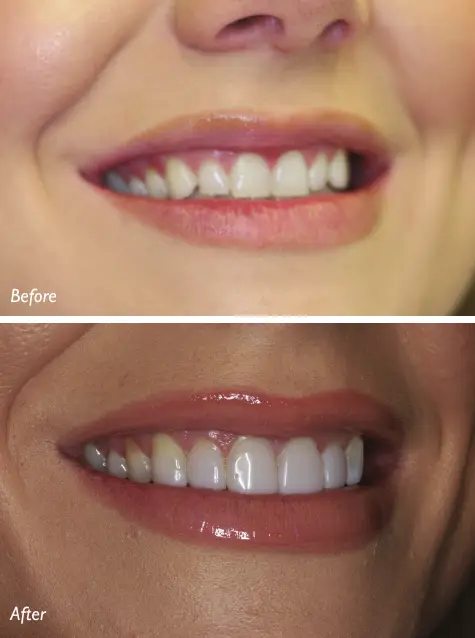
What Is Composite Bonding?
Claire Hughes from Claire Hughes Dental explains why composite bonding has become one of the most popular ways to refresh a smile, and what to know before deciding if it is the right treatment for you.
Composite bonding has become one of the most talked-about cosmetic dental treatments in recent years, but what exactly is it?
In simple terms, composite bonding is a cosmetic dental procedure where a tooth-coloured resin material is applied directly to the teeth, then carefully moulded and shaped to improve the appearance, balance and symmetry of the smile. It is often described as minimally invasive dentistry because, in many cases, little or no drilling is needed on the natural tooth.
Composite bonding is really an umbrella term that can include both composite veneers and composite edge bonding.
Composite edge bonding is often used to repair small chips in the enamel at the biting edges of the front teeth or to subtly increase length. Composite veneers, on the other hand, cover more of the tooth surface to create a smoother, more harmonious overall finish.
Why is composite bonding used?
Composite bonding is most commonly used to fix chipped, worn, cracked or discoloured teeth, close small gaps, reshape uneven teeth or make teeth appear longer.
It is also very often used after braces or Invisalign treatment to correct worn edges and refine the final result once the teeth have been straightened.
Your dentist will carefully choose a composite resin shade to match your natural teeth, then apply and sculpt the material into shape before hardening it with a special light. It is then finely shaped and polished to create a smooth, natural-looking finish.
Many people choose to whiten their teeth before composite bonding so the overall smile transformation includes both shape and colour.
Is composite bonding suitable for everyone?
Composite bonding is suitable for many people, but not for everyone. Your cosmetic dentist will assess the health and function of your teeth, as well as the condition of your gums, before recommending treatment. Healthy gums are especially important, as bonding will look better and last longer when the mouth is in good condition.
If your gums or teeth need attention first, your dentist will recommend the right steps to improve your oral health before going ahead. That may include one or two visits to the hygienist before treatment begins.
Once the teeth and gums are healthy, and whitening has been completed if you choose to do that, the process is usually quick, often completed in a single visit. It is minimally invasive and typically requires little to no removal of natural enamel, which is why it is considered one of the more conservative cosmetic dental options available.
How long does it last?
Composite bonding is generally less expensive than porcelain veneers and, with good care, can last around five to seven years.
As with any cosmetic dental treatment, maintenance matters. Composite can pick up staining over time, particularly with tea, coffee or smoking, so occasional polishing may be needed to keep it looking its best.
Treatment can be planned digitally, particularly when an entire row of teeth is being treated, or completed freehand by a highly skilled cosmetic dentist depending on the case.
How do you know if it is right for you?
It all starts with a consultation. Your dentist will talk through what you would like to achieve with your smile, then examine your teeth, assess your oral health, and carry out a full oral cancer screening. Photographs, radiographs and a 3D scan may also be taken to help build a full picture before planning treatment.
Using all of that information, your dentist can then create a personalised treatment plan to improve the health, function and appearance of your smile.
Many people choose to improve their smile ahead of a big life event such as a wedding or graduation. If you are thinking about a wedding smile makeover, we would always advise getting in touch with a cosmetic dentist around a year in advance. That gives enough time in case alignment treatment is needed before bonding.
At Claire Hughes Dental, we always love helping patients feel confident in their smiles for the moments that matter most.
Contact Details
Claire Hughes Dental & Facial Aesthetics
Spencer House
L’Derry
Northern Ireland
BT47 6QA
Tel: +44 28 7131 1333
Website: www.clairehughes.dental