




Sheena Noelle Design
Designing with Light in Mind
Interior designer Sheena Noelle explains why roof window blinds have become an essential part of modern homes, and how new systems like KuroLok are changing the way we design brighter spaces.
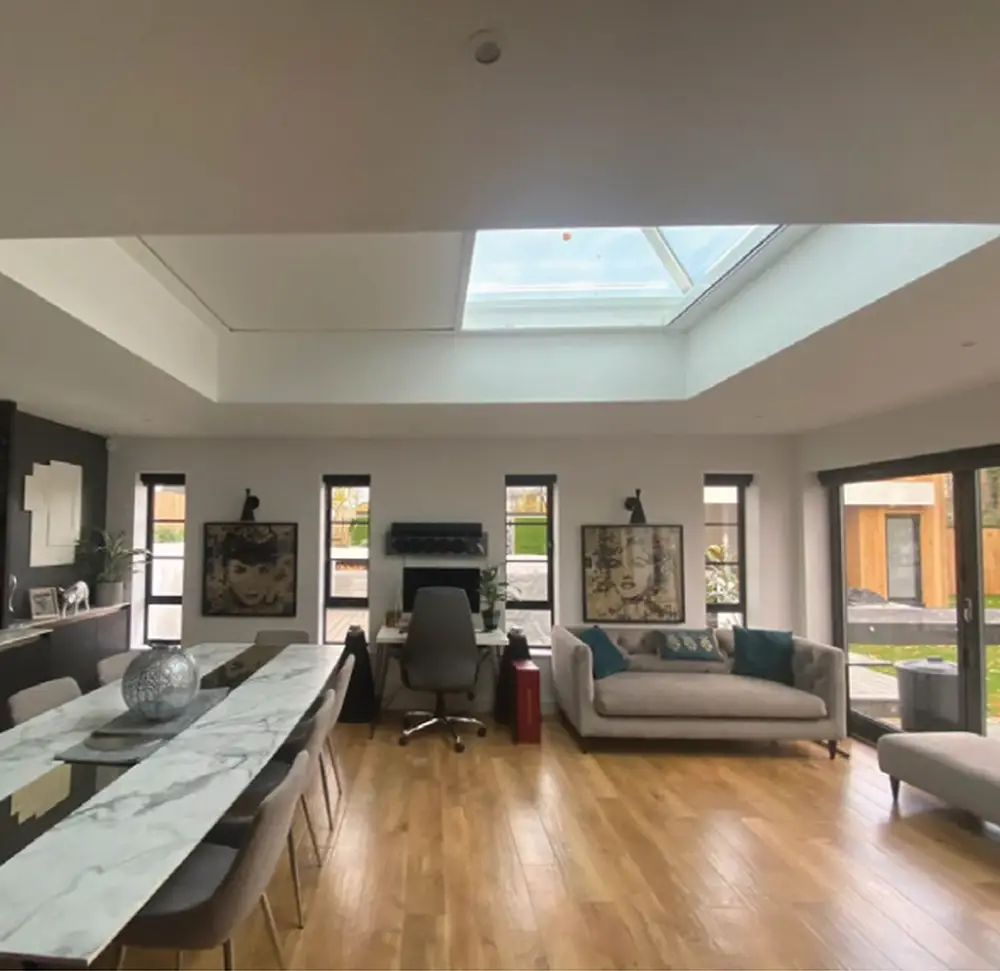
As contemporary homes embrace roof-lights, skylights and glazed extensions, interior design has had to evolve alongside them. These features flood spaces with natural light, but they also bring challenges, from glare and overheating to a lack of privacy.
The solution is no longer just about adding blinds. It is about choosing systems that work with the architecture of the space, not against it.
A New Approach to Roof Blinds
Roof window blinds are no longer an afterthought. In modern interiors, particularly kitchen extensions, loft conversions and open-plan living spaces, they play an important role in balancing light and comfort.
Unlike vertical windows, roof glazing sits at angles that intensify sunlight throughout the day. Without the right shading, rooms can quickly feel too bright or too warm.
Well-designed systems help manage this by softening light, reducing heat and maintaining privacy, while still allowing a space to feel open and connected to the outdoors.
Why KuroLok Stands Out
One of the most interesting developments in this area is the rise of systems like KuroLok roof blinds, which are designed specifically for angled glazing.
Unlike standard roller blinds, which can struggle to sit neatly on roof windows, KuroLok uses a tensioned system to keep the fabric smooth and in place, even on sloped or overhead installations. The result is a much cleaner finish, without the sagging that is often seen with more basic solutions.
The fabric is also held securely within slim side channels, which helps prevent light gaps and creates a more refined, built-in look. This is especially important in contemporary interiors, where clean lines and simplicity are key.
Another advantage is flexibility. These systems can be adapted to suit a wide range of glazing, from flat roof-lights to more complex architectural designs, making them a practical choice as well as a design-led one.
Designing Around Light
When incorporating roof blinds into a scheme, it is important to think about both function and style.
Blinds can be chosen to blend seamlessly with the ceiling for a subtle finish, or used to add gentle contrast and highlight the architectural feature. In spaces with large areas of glazing, combining roof blinds with vertical window treatments can help create more control throughout the day.
Motorisation is also worth considering. In double-height spaces or hard-to-reach areas, automated systems are not just a luxury, they make everyday use far more practical.
Fabric choice is equally important. While blackout options are ideal for bedrooms, lighter fabrics can soften glare while still maintaining a connection to the sky, which works beautifully in living spaces.
A Modern Essential
As homes become brighter and more open, the demand for intelligent shading continues to grow. Roof blinds are no longer simply functional. They are part of the overall design, helping to shape how a space feels and how it is used.
In summer, when light is at its strongest, they offer something simple but essential: control.
And in any well-designed home, that balance between light and comfort is what makes a space truly liveable.
Contact Details
Sheena Noelle Design
Cleenagh
Buncrana
Co Donegal
F93 VYF5
Tel: 0833781871
Website: www.sheenanoelledesign.com